


Recovery doesn’t always feel like a victory lap. Sometimes it feels more like walking through a quiet house after the storm has passed.
If you’ve lived through depression and come out the other side, you already know something important: the hardest moment may be behind you, but the relationship with your mental health continues. Many long-term alumni discover that staying well isn’t about dramatic breakthroughs anymore. It’s about awareness — the quiet, ongoing work of paying attention to how you’re actually doing.
If at any point you feel like you need support again, it can help to reconnect with professional care. Exploring options for depression support and care can be a way to check in with yourself and make sure you’re still getting what you need.
What many people don’t talk about is that this stage of recovery can feel confusing. You’re doing better. But sometimes you’re not sure what “better” is supposed to feel like long-term.
The Strange Silence After Surviving Something Hard
During the most difficult stages of depression, life often becomes very focused.
There are appointments, therapy sessions, new coping tools, and conversations that finally give language to what you’ve been feeling. Recovery during that phase can feel active and purposeful.
Then something shifts.
The calendar isn’t filled with treatment schedules anymore. The intense emotional work slows down. Daily life returns.
And suddenly there’s quiet.
For many people, that quiet brings an unexpected thought:
“Now what?”
You may notice yourself wondering whether you’re supposed to feel more relief than you do. Or whether life should feel easier than it currently does.
This is a common experience for people who have moved through treatment and stabilized their mental health. The structure that once held everything together fades, and what remains is the task of building a sustainable, everyday relationship with your well-being.
That part doesn’t always get talked about enough.
Feeling “Flat” Doesn’t Mean You Failed
One of the most surprising things long-term alumni report is emotional flatness.
Not sadness exactly. Not crisis.
Just… muted.
You may still show up to work. Maintain relationships. Handle responsibilities. From the outside, things look stable.
But internally, it can feel like something is missing.
Many people quietly worry that this means their recovery “didn’t work.” That the hope they felt earlier somehow disappeared.
In reality, this phase often reflects something much more ordinary and human.
Your brain has spent time recovering from an intense emotional state. Stability can initially feel unfamiliar. Without the urgency of crisis or the energy of early breakthroughs, everyday life can seem dull by comparison.
It’s similar to how athletes feel after completing a long, demanding race. The adrenaline fades. The finish line has been crossed. But the body and mind still need time to adjust to normal pacing again.
This doesn’t erase your progress.
It simply means your life is moving into a quieter phase of healing.
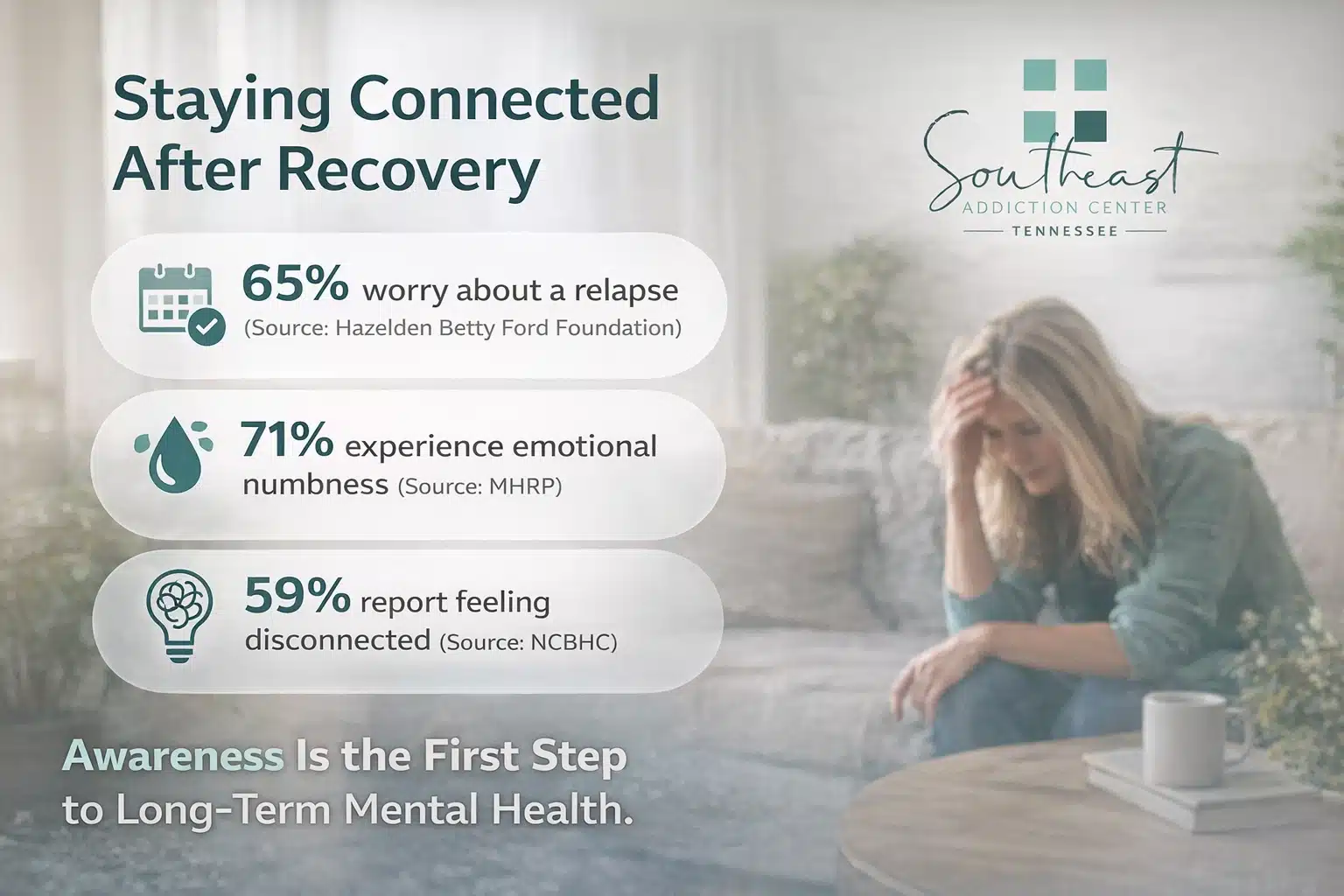
Mental Health Awareness Becomes a Daily Practice
Early recovery often focuses on getting through the hardest moments. But long-term stability depends on something different: awareness.
Awareness isn’t dramatic. It’s not a big emotional breakthrough or a sudden life change.
It’s the quiet habit of noticing what’s happening inside you.
Over time, many alumni develop small practices that help them stay connected to their mental health:
- Checking in with their mood throughout the week
- Paying attention to sleep patterns and energy levels
- Noticing when stress begins to build
- Talking openly with trusted people about how they’re doing
- Recognizing early signs of emotional overwhelm
These habits may seem simple, but they create a powerful form of protection.
Mental health challenges rarely appear overnight. More often, they build gradually — small shifts that grow larger if they go unnoticed.
Awareness allows you to catch those signals early.
It’s not about constantly monitoring yourself. It’s about staying curious about your own well-being.
Disconnection Happens to a Lot of Alumni
Even with strong awareness, periods of disconnection can still happen.
Life gets busy. Responsibilities pile up. The routines that once supported your mental health slowly fall away.
You might stop journaling. Skip therapy check-ins. Avoid conversations about how you’re feeling.
Sometimes this happens because things are going well and you don’t think you need those tools anymore.
Other times, it happens because something inside you feels difficult to face.
Either way, many alumni reach a point where they notice themselves thinking:
“I did the work already. Why does it still take effort?”
The answer is simple but important.
Mental health isn’t a one-time achievement. It’s a relationship.
Just like physical health, it requires occasional attention, adjustment, and care. The goal isn’t to eliminate effort completely — it’s to build habits that make the effort sustainable.
The Small Signals Worth Paying Attention To
One of the most valuable skills people develop after treatment is recognizing subtle shifts before they grow into bigger struggles.
These early signals are often quiet. Easy to dismiss. But they can tell you a lot about what your mind needs.
Some common signs that it might be time to check in with yourself include:
- Losing interest in routines that once helped you feel grounded
- Feeling emotionally numb for extended periods
- Becoming more irritable or impatient with people close to you
- Avoiding conversations about your mental health
- Feeling overwhelmed by responsibilities that once felt manageable
- Experiencing changes in sleep or appetite
None of these signs automatically mean something serious is happening.
They simply suggest that your mental health may need attention again.
And attention is not the same thing as crisis.
Sometimes the most powerful step is simply acknowledging that something feels off and deciding to take care of yourself sooner rather than later.
Staying Connected to the Work
People who maintain long-term stability often share one important mindset: they stay connected to the work.
That doesn’t mean constantly thinking about recovery. It means remaining open to the idea that personal growth continues long after treatment ends.
For some people, staying connected looks like returning to therapy occasionally for check-ins.
For others, it means building supportive communities, developing new routines, or continuing to learn about mental health.
Many alumni also discover that helping others or sharing their experiences deepens their own understanding.
There is no single path.
What matters is remaining willing to listen to yourself and respond when your mind asks for care.
Recovery Isn’t a Straight Line
It’s easy to believe that once depression improves, life should move steadily upward from there.
But real life rarely works that way.
People experience stress. Loss. Major life transitions. Unexpected challenges.
Even with strong coping skills, there may still be periods when things feel heavier than usual.
Those moments don’t erase your progress.
They are simply part of being human.
One of the most powerful shifts long-term alumni make is redefining what success looks like. Instead of expecting perfection, they measure success by how quickly they notice when something feels off — and how willing they are to reach out for support.
That mindset keeps recovery flexible, realistic, and sustainable.
Reconnecting With Support Is Always an Option
Some people hesitate to seek help again because they believe they “should” be able to manage things on their own by now.
But needing support doesn’t mean you’ve failed.
It means you’re paying attention.
Mental health care isn’t just for moments of crisis. It can also serve as a place to reflect, reset, and strengthen the tools that help you stay well.
Reaching out for guidance after treatment can be a powerful way to protect the progress you’ve already made.
Call 615-326-6449 or explore our treatment, mental health, depression services to learn more about options available through Southeast Addictions TN.