
Need Help? Call Us 24/7 at 615-326-6449

Alcohol Addiction Treatment in Nashville, TN

You don’t have to figure this out alone. If alcohol is starting to control your day, your mood, your relationships, or your health, help is available — and treatment can be flexible enough to fit real life.

Worried about withdrawal? Call us first. We’ll help you choose the safest next step—confidentially.”

Help Right Now: What To Do Today

If you’re in immediate danger, call 911.
If you’re in emotional distress or crisis, you can call or text 988 (Suicide & Crisis Lifeline).

If you’re worried about withdrawal:

  • Don’t try to quit “cold turkey” alone if you’ve been drinking heavily or daily.
  • Call us first — we can help you choose the safest next step, including coordinating a medical detox provider when needed

Start here: Call (615) 326-6449 for a confidential conversation about what’s going on and what level of care fits.

Help Right Now: What To Do Today

Use this quick guide to choose the safest next step.

Step 1

Immediate danger?

If you or someone else is in immediate danger, call emergency services.

Call 911
Step 2

Withdrawal risk?

If you’ve been drinking heavily/daily, don’t quit “cold turkey” alone.

Shakes Sweating Panic Sleepless nights Seizure concern
Call (615) 694-1971
Step 3

Not sure where to start?

Call us. We’ll recommend the safest next step (and detox coordination if needed).

Call Admissions
Crisis

In emotional distress?

Call or text the 988 Suicide & Crisis Lifeline for free, 24/7 support.

Call or Text 988

Shakes, sweating, panic, or sleepless nights? Let’s talk about safer options.

What “Alcohol Use Disorder (AUD)” Means

Alcohol addiction (clinically often called Alcohol Use Disorder) isn’t about willpower — it’s a condition that can change how the brain responds to stress, reward, and cravings.

AUD can look like:

  • Drinking more or longer than you planned
  • Trying to cut back and not being able to
  • Needing alcohol to feel “normal”
  • Continuing to drink even when it’s causing harm

The right treatment plan depends on severity, withdrawal risk, and whether there are co-occurring mental health concerns (like anxiety, depression, trauma, etc.).

Alcohol and the Brain: Why It Becomes Hard to Stop

Alcohol can temporarily create feelings like relaxation or confidence. Over time, the brain may start to rely on alcohol to regulate mood and stress — which can increase cravings and make “just stopping” feel impossible.

As tolerance increases, many people have to drink more to feel the same effects — and that pattern can raise health and safety risks quickly.

Signs Alcohol Addiction May Be Getting Worse

Alcohol use can become a problem even when life looks “fine” from the outside. Common signs include:

  • Feeling distressed when alcohol isn’t available
  • Wanting to stop but not being able to
  • Preoccupation with drinking (planning, hiding, recovering)
  • Mood swings, irritability, anxiety when not drinking
  • Defensiveness or avoiding conversations about drinking
  • Impact on work/school performance or relationships
  • Physical symptoms like headaches, bloodshot/glassy eyes, emotional outbursts
Long-Term Health Effects of Heavy Drinking

Long-term heavy alcohol use can affect nearly every system in the body. Potential complications include liver disease, heart issues, immune suppression, nutrient deficiencies, and increased risk for certain cancers, among other concerns.

Alcohol Withdrawal: When It Can Be Dangerous

Alcohol withdrawal can range from uncomfortable to life-threatening, especially for people who’ve been drinking heavily over time.

Milder symptoms can include anxiety, agitation, tremors, and irritability. In more severe cases, withdrawal may involve hallucinations, seizures, or delirium tremens.

If you’re unsure what applies to you, call us — we’ll help you determine whether you should start with detox coordination first.

Unsure if it’s safe to stop drinking today? Call — we’ll help you decide what’s safest.

Alcohol Addiction Treatment at Southeast Addiction Center

Getting help through a professional addiction treatment program can be the difference between repeating the cycle and building a stable recovery.

At our Nashville center, we help you:

  • Address alcohol use and the patterns behind it
  • Identify and treat co-occurring mental health concerns
  • Build coping skills and relapse-prevention tools
  • Create a practical plan for life after treatment

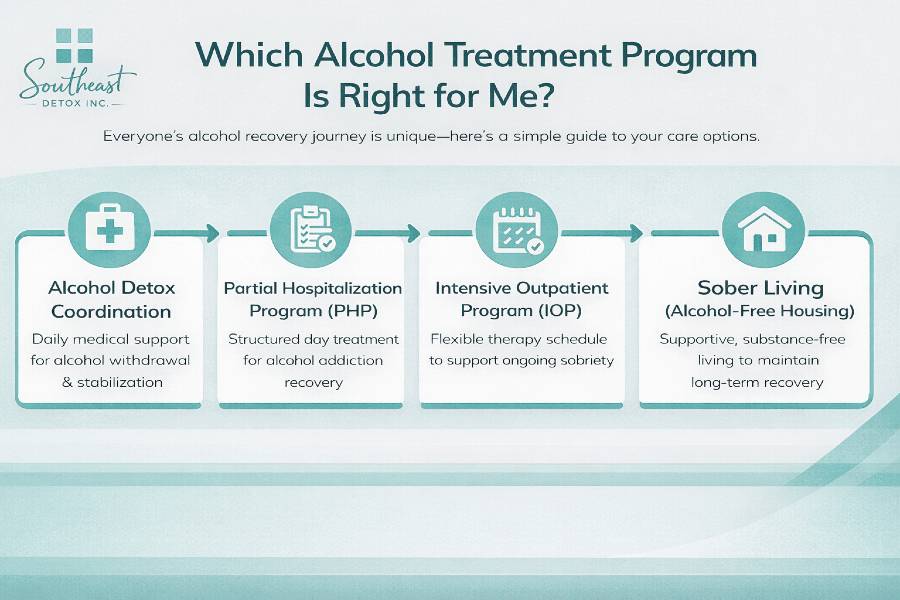
Which Program Is Right for Me?

Here’s a simple way to think about next steps (your actual plan is based on an individualized assessment):

You may need detox coordination first if:

  • You’ve been drinking heavily/daily
  • You’ve had withdrawal symptoms before
  • You’re concerned about seizures, hallucinations, or severe symptoms
    We can help you find a safe detox provider before you begin PHP/IOP.

PHP may fit if you need more structure

PHP is our highest level of care — structured treatment during the day while sleeping at home at night.

IOP may fit if you need strong support with more flexibility

IOP offers multiple hours of treatment while allowing you to keep up with work, family, and responsibilities.

Sober living may help if home isn’t a stable environment

We don’t offer inpatient/residential, but we can provide access to sober living options for added structure and support.

Which alcohol addiction treatment program is right for me?

Our Programs

Verify Insurance

Get a free no-obligation insurance verification.

About Us

Our Campus

Take a virtual tour of our facilities.

Your Recovery Starts Here

Our admissions team is ready 24/7 to guide you through the process, from admission to coordinating travel, treatment programs, and more.

Partial Hospitalization Program (PHP)

PHP provides a structured treatment schedule during the day with the ability to return home at night. Length of stay depends on clinical needs and progress.

Services may include:

  • Individual therapy and group therapy
  • CBT and DBT-informed care
  • Medication management (as appropriate)
  • Psychoeducation
  • Family therapy
  • Coping skills + relapse prevention
  • Mindfulness and stress reduction
  • Trauma-informed options (including EMDR when appropriate)
  • Recreational / experiential support

Intensive Outpatient Program (IOP)

IOP is designed for people who need meaningful clinical support but can’t step away from responsibilities full-time.

IOP may be a strong fit if you:

  • Need structure and accountability
  • Want support while working or caring for family
  • Need a step-down from PHP or a step-up from standard outpatient

Intensive Outpatient also supports transition planning so you feel prepared when stepping back into daily life.

Sober Living Access

While we do not offer inpatient/residential treatment, we can connect clients with sober living options — alcohol- and drug-free environments designed to support early recovery.

Sober living can help you:

  • Stay removed from triggering environments
  • Build recovery routines
  • Connect with peers and accountability

Recovery Support That Continues After Sessions

Recovery doesn’t end when programming hours end — ongoing support matters.

We help clients build a support plan that can include:

  • Alumni program
  • Support groups
  • Medication management
  • Drug screening
  • Ongoing recovery planning and accountability

12-Step & Community Support (AA)

Many clients benefit from peer support in the community. We make sure clients know how to access Alcoholics Anonymous (AA) meetings in the Nashville area as part of a long-term support plan.

Medications and Alcohol Recovery Support

For some people, medication can be a helpful part of alcohol addiction treatment — especially when it’s paired with evidence-based therapy and ongoing recovery support.

Medication support for alcohol use disorder

Our team may recommend or coordinate medication support based on your needs, goals, and clinical history. For example, Vivitrol® (naltrexone) may be used to help reduce cravings and support recovery as part of a comprehensive plan.

Medication decisions are always individualized. If medication support is appropriate, we’ll help you understand:

  • What the medication is designed to support (cravings, relapse prevention, stability)
  • How medication fits alongside therapy, groups, and skill-building
  • How medication support can continue during step-down care and aftercare planning

Treatment is substance-specific

Medications used in addiction care are often tailored to the substance involved. If you’re seeking help for alcohol use or alcohol plus another substance, we’ll help you identify the right approach and coordinate the appropriate services as part of your treatment plan.

Why Choose Southeast Addiction Center

When you call, you’ll reach a team that can help you:

  • Understand what level of care fits
  • Navigate insurance and costs
  • Move quickly into the right program
  • Coordinate detox when needed
  • Get support for co-occurring mental health concerns

Get Help Today

If you or a loved one is struggling with alcohol, contact us today. We’ll help you take a clear next step — from assessment to program planning to insurance verification.

Not sure what’s covered? Verify insurance in minutes and get a clear breakdown of options.

Most Insurances Accepted

Alcohol Addiction Treatment FAQs

If you’ve been drinking heavily/daily or have had withdrawal symptoms before, detox may be the safest first step. Call us — we can help assess risk and coordinate a detox provider.

Yes. PHP and IOP are structured programs designed for people who return home after sessions.

PHP is typically more structured and time-intensive than IOP. IOP is designed to be flexible for work and family while still providing strong clinical support.

Co-occurring mental health concerns are common — and treating both together can improve recovery outcomes.

Your site includes insurance verification and notes working with many insurance providers (including options for out-of-network situations). The fastest way to confirm is to verify insurance or call admissions.

Your page states you do not offer inpatient/residential, but you provide access to sober living options and can coordinate appropriate referrals when needed.