


You didn’t plan to disappear.
It wasn’t a dramatic exit. No angry goodbye. No relapse spiral (maybe). Just a slow slide away. One missed session turned into three. A few unread texts from your therapist. Then nothing.
You kept meaning to call. You didn’t. Life got loud. Shame got louder.
And now you’re thinking about coming back—but you’re wondering:
Is that even allowed?
Let’s start here: Yes. You can come back. You absolutely can.
And not only is it allowed, it’s welcomed.
If you dropped out of a multi-day weekly treatment program and feel awkward, ashamed, or unsure about returning, this blog is for you. Let’s talk through how to come back without judgment, without pressure—and without starting over.
You’re Not the First Person to Ghost—and You Won’t Be the Last
Seriously. Ghosting isn’t rare. We see it more than you think.
Sometimes it’s one missed session that snowballs. Sometimes it’s an emotional spiral you didn’t expect. Sometimes it’s just life kicking the crap out of your bandwidth.
And sometimes? You were just tired of holding it all together in public.
You didn’t want to show up messy. So you didn’t show up at all.
Sound familiar?
You’re not the only one who’s paused their healing. You’re not the only one who’s looked at their calendar and thought, “I can’t do this today.”
What matters is that you’re thinking about reconnecting now. That’s not failure—that’s movement.
You Don’t Owe a Perfect Explanation
We know what shame sounds like:
- “They’re gonna ask why I left.”
- “I don’t have a good reason.”
- “They’ll think I wasn’t serious about recovery.”
Let’s be clear: you don’t owe us a dramatic speech or a clean narrative.
You don’t have to tell us anything you’re not ready to say.
Coming back can sound like:
“Hey… I stopped showing up. I want to rejoin if that’s possible.”
That’s it. That’s enough.
And if you do want to talk about what happened? We’ll listen. But you’re not required to unpack it all in one go. You just need to walk back through the door (or pick up the phone), and let us meet you where you are now—not where you left off.
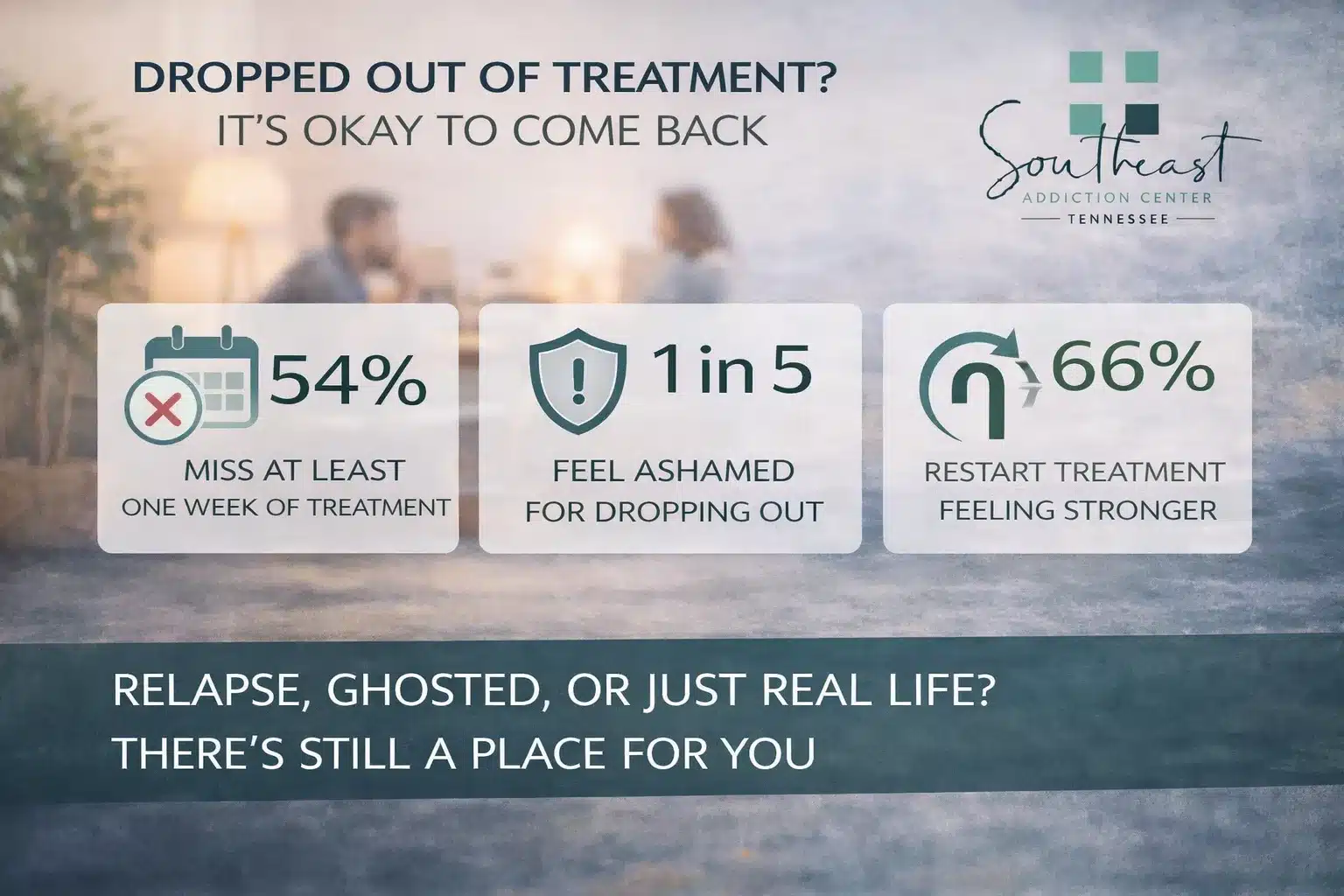
We Don’t Keep Score. We Keep the Door Open.
Here’s the thing: the moment you left, we didn’t start counting against you.
We didn’t label you. We didn’t give up. And we sure as hell didn’t erase your name.
You are not a “no-show.”
You are not a “failure.”
You are not someone we’ve written off.
You’re someone who needed space—or maybe safety, or distance, or quiet.
And now that you’re ready (or thinking about being ready), the door’s still open.
This isn’t high school. You don’t get detention for missing group. You get re-invited to your own growth.
You Probably Don’t Have to Start Over
This is one of the most common fears—and one of the easiest to put to rest.
No, you don’t automatically have to restart the entire program.
If you dropped off mid-phase, we’ll figure out what makes sense now. You may pick back up close to where you left off, or step into a slightly adjusted track. You won’t be treated like a newbie. And your earlier progress? Still counts.
You didn’t forget what you learned. You didn’t un-heal. You didn’t erase your growth.
Even if you lost footing—your foundation is still under you.
That Awkward Feeling? Totally Normal. Very Temporary.
Walking back into a space you left can feel like walking into a room full of eyes.
You might be bracing for awkward silences. Or fake smiles. Or whispered judgment.
Spoiler: most of the people there won’t care.
And the ones who do care? They’ll probably say, “I’m glad you’re back.”
Because here’s the thing about recovery spaces: everyone in that room knows how hard it is to stay. They’ve all faced their own version of “I almost didn’t come back.”
You returning makes it safer for them to do the same someday.
So yeah—it might feel weird for the first 15 minutes. But after that?
It starts to feel like home again.
You Might Show Up Stronger This Time
This might surprise you, but many people come back to treatment with more power than the first time. Why?
Because now you know:
- What avoidance feels like
- What isolation costs
- What you miss when you walk away from support
You’re not guessing what might happen if you stop showing up. You’ve lived it.
And if you’re reading this now, it means part of you wants something different this time.
That’s not weakness. That’s clarity.
And clarity? That’s rocket fuel for real change.
Others Have Left—and Come Back Better
Let’s normalize this: ghosting happens.
And so does growth afterward.
We’ve had people:
- Walk out after week one, return two months later, and finish strong
- Drop out mid-treatment, then re-engage and go deeper than ever
- Relapse quietly, then re-enroll with more honesty than they ever had before
Not a single one of them came back “too late.”
Returning isn’t a step back. It’s a step in—deeper, fuller, more real.
You Don’t Have to Believe in Yourself Yet—We’ll Do That For You
Maybe you’re not sure this time will be different.
Maybe part of you still thinks:
“I’ll probably ghost again. I’m not consistent. I don’t follow through.”
That’s okay. Let us believe for you—until you can believe it yourself.
Let us hold a little hope while yours rebuilds.
Because that’s what community care is. Not just accountability—but compassion.
Not just showing up—but being welcomed when you do.
FAQs: Coming Back After Dropping Out
Do I have to explain why I ghosted?
No. If you want to, we’ll listen. But there’s no requirement to share everything. You’re welcome either way.
Will I be judged by staff or peers?
No. This happens more than you think. Our team and your group get it. They’ve likely been there themselves.
Will I have to restart the program from the beginning?
Not necessarily. We’ll assess where you left off and what’s best now. Many people rejoin close to where they paused.
Can I switch to fewer days or a different schedule?
Possibly. Let’s talk. We’ll find something that fits your life now, while still giving you the support you need.
What if I left because I was overwhelmed emotionally?
That’s common. And honestly? That awareness is a powerful reason to return. You’re not wrong for needing space.
I’m afraid I’ll leave again. Is it worth coming back?
Yes. Every return builds something. Even if you’re not sure you can stay, coming back is always worth it.
You Can Come Back Quietly. Or Loudly. Just Come Back.
Whether you left last week or last year—whether you ghosted after a rough day or a string of okay ones—you’re still allowed to return.
No explanation required. No shame attached.
Call 615-326-6449 or explore our multi-day weekly treatment program. We’ll meet you with openness, not lectures. We don’t care how long it’s been. We just care that you’re here now.