


You Left. You’re Not the First. You’re Not the Last.
You were in treatment. You were showing up—maybe not every day, maybe not always on time—but you were trying.
And then… you weren’t.
Maybe you ghosted. Maybe you said you needed “just a few days” and never came back. Maybe you promised yourself you’d return and didn’t. Or maybe you swore you’d never return at all—but here you are, reading this.
If you’re wondering whether you’d be welcomed back to your intensive outpatient program, the answer is simple: Yes.
At Southeast Addiction Tennessee, we know that disappearing from IOP isn’t the end of the road. And it’s not disqualifying. Life is messy. Healing is messy. Coming back is always on the table.
There’s No “Walk of Shame” Here
Let’s be real: one of the hardest parts about returning is the story in your head.
They’re going to judge me. They’ll ask where I’ve been. Everyone will look at me differently.
You’re not imagining that fear. But we’re here to tell you—none of that’s how we do things.
When clients return to IOP after ghosting, our reaction is never, “Why did you leave?”
It’s: “We’re glad you’re back.”
There’s no scolding. No lectures. No cold shoulder.
Because shame doesn’t help you heal. Safety does.
Your Reasons Are Valid, Even If You Don’t Know What They Are Yet
People step away from treatment for all kinds of reasons. Some are obvious—relapse, burnout, family emergencies. Others are quieter:
- You started feeling too seen in group
- Therapy cracked something open you weren’t ready for
- You were afraid you weren’t doing it “right”
- You got overwhelmed, and leaving felt easier than staying
Sometimes you don’t even realize why you left until weeks later. That’s okay. You don’t need a perfect explanation to come back. You just need the willingness to walk through the door again.
You Don’t Lose the Progress You Made
Even if it feels like you blew it—you didn’t.
Sure, you might feel like you’re back at square one. But that’s not true. What you learned, what you felt, the moments when you let your guard down in group or had an insight in therapy—those don’t vanish.
They’re still part of you.
Think of recovery like learning a language. If you stop speaking it for a while, you get rusty. But you haven’t forgotten it. Coming back just helps you remember—and build fluency again.
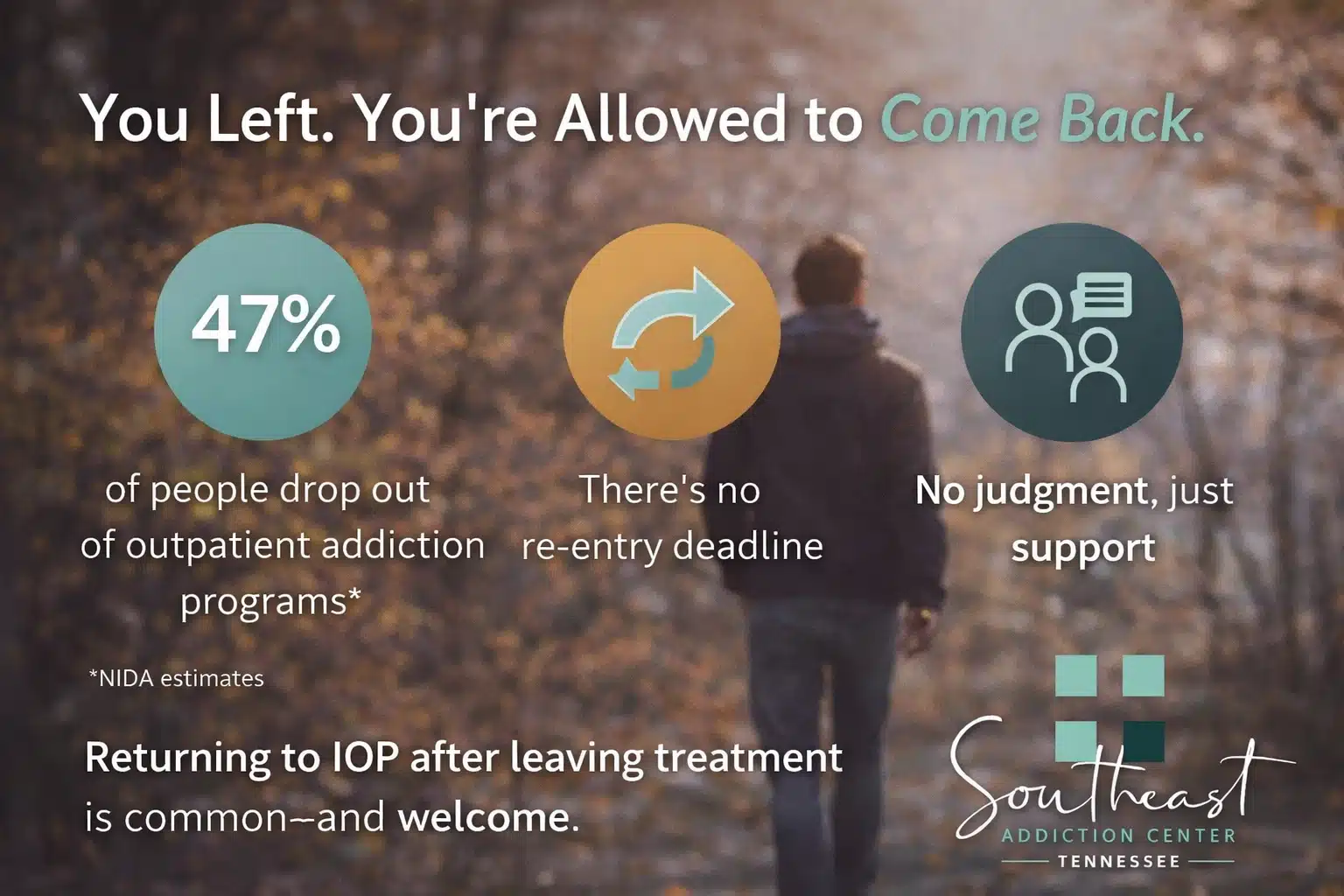
The Program Will Meet You Where You Are Now
Maybe your needs have changed. Maybe your goals have shifted. That’s normal.
When you return to an intensive outpatient program, it’s not about plugging you back into the exact schedule you had before. It’s about re-entering with honesty.
We’ll check in:
- Are the same groups still a good fit?
- Has your home or work life changed?
- Do you need a slower pace or a different kind of support?
We’re not here to “catch you up.” We’re here to support you now—not the version of you who left.
You’re Allowed to Come Back Quietly
Not everyone wants to make a big return. That’s okay.
If you feel awkward or ashamed or unsure of what to say, just say this:
“I think I need help again.”
That’s it. That’s all we need. You don’t have to explain everything. You don’t have to confess. You just have to show up.
And we’ll take it from there.
Your Group Might Surprise You
You may expect side-eyes or judgment from your peers. But more often than not, returning clients hear:
“I’m glad you’re back.”
“I left once too. It was hard to come back, but worth it.”
“You showing up today? That helps me show up too.”
Because your return sends a message—to you and to others: We get more than one try.
The Story Isn’t Over
You left. Okay.
But you’re still here.
And that means the story is still unfolding. The person you want to be is still within reach—not in some perfect future, but starting the moment you allow yourself to return without apology.
“I avoided group for three weeks. I thought they’d call me a flake. But when I walked in, the counselor said, ‘We missed you.’ That’s it. No lecture. No drama. That sentence gave me enough hope to stay.”
– Southeast IOP Client, 2023
Quick Re-Entry Tips (Because We Know This Isn’t Easy)
If You’re Thinking About Coming Back:
- Text or call first. You don’t have to explain. Just say you’re interested in rejoining. That’s enough.
- Let yourself feel awkward. It passes. Every returner has felt that first-day tension.
- Ask for a reset. If you need different support this time, ask. This isn’t about punishment. It’s about progress.
- Give yourself credit. Seriously. Coming back takes more courage than starting the first time.
- Be honest. With your team. With yourself. You don’t have to perform. You’re allowed to be raw.
Why Do People Drop Out of IOP?
Because treatment is hard.
It stirs up things you’ve been avoiding. It pushes against familiar coping. It asks you to stay when every instinct tells you to bolt.
And sometimes? Life just throws too much at once.
But none of that makes you a failure. It makes you human.
What matters is what you do next.
FAQs: Coming Back to IOP After a Break
Will I have to start over from the beginning?
Not necessarily. Your care team will meet with you to assess where you are. You might resume where you left off, or shift into a different plan. It’s flexible—and based on your needs now.
Will I be judged for leaving?
No. Southeast Addiction TN operates with compassion, not shame. We know that stepping away is part of many people’s journey. You’re not alone—and you’re not disqualified.
Do I need to explain why I left?
Only if you want to. We’re more interested in what you need moving forward than what went wrong in the past.
Can I rejoin even if I relapsed?
Yes. In fact, relapse is one of the most common reasons people return. It’s not a dealbreaker. It’s a sign that more support might be helpful.
What if I ghosted for months?
You can still return. There’s no expiration date on welcome.
What if I’m not sure I want to finish this time either?
That’s okay. Ambivalence is allowed. We’ll help you figure out what you do want—and support you while you explore it.
The Door Is Still Open
No matter how long it’s been, no matter how awkward it feels, no matter what you did while you were gone—the door is open.
Coming back to an intensive outpatient program isn’t admitting failure. It’s choosing hope over shame. It’s choosing yourself, again.
At Southeast Addiction TN, we see people leave and return every month. We don’t see dropouts. We see humans who paused—and then chose to begin again.
And if you’re reading this? You might be one of them.
Ready to come back—on your terms?
Call (615) 326-6449 to learn more about our Intensive outpatient program services in Tennessee. No shame. No pressure. Just an open door.