Sometimes, leaving treatment doesn’t feel like a clear decision—it just happens. One missed session turns into a week, and before you know it, you’re out. It might have been a bad day, a wave of panic, a tough moment you didn’t feel ready to share. Or maybe life got in the way—work, family, court stuff, transportation, mental exhaustion. You weren’t trying to quit recovery. You were trying to survive.
If you’re here reading this, it means something in you still wants help. That matters more than how long it’s been or how you left.
This blog isn’t about guilt. It’s about honesty, re-entry, and naming what you need now—with no lectures, no shame, and no assumptions that you’re back at square one.
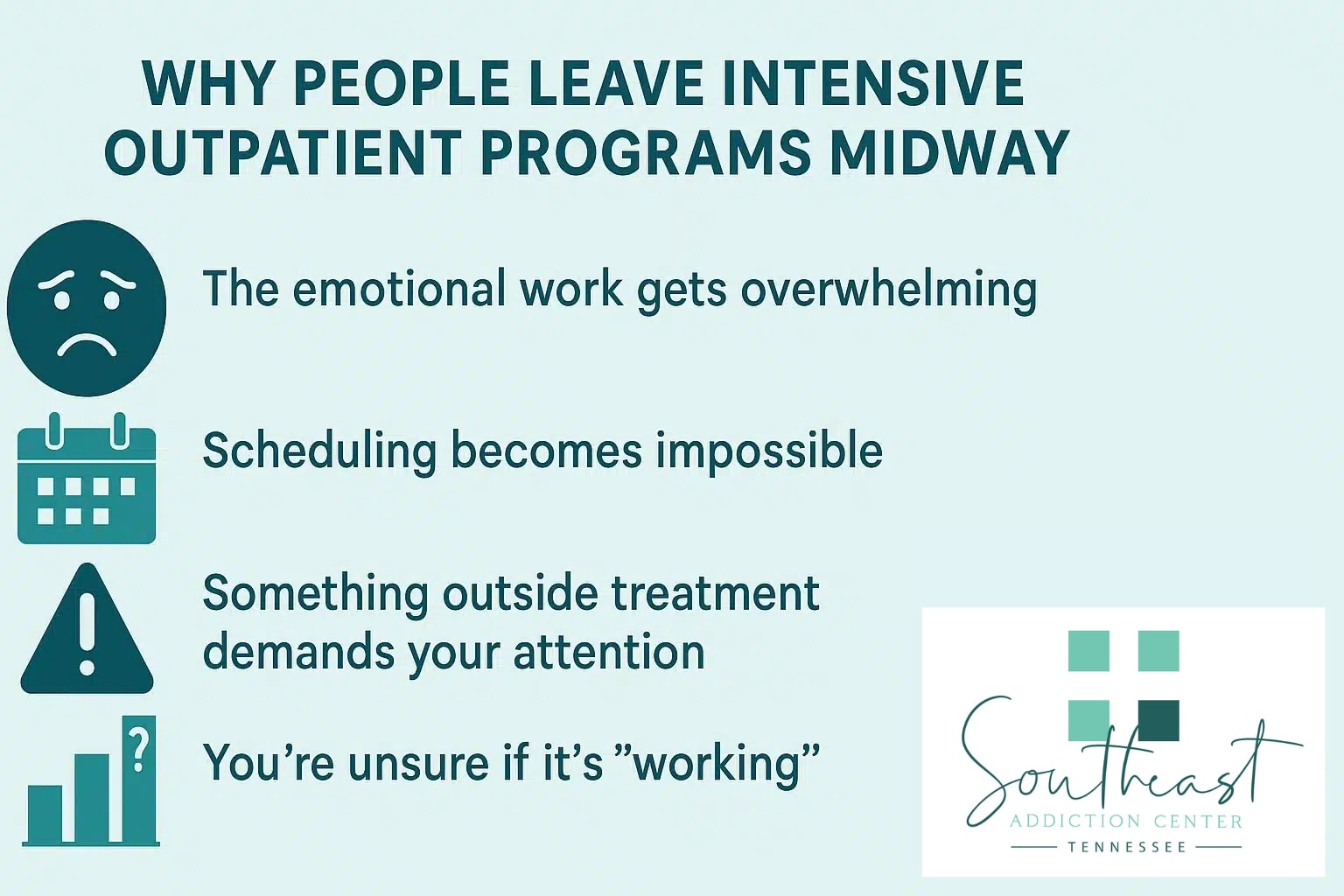
Why People Leave Intensive Outpatient Programs Midway
Let’s name it: IOP isn’t easy. It asks you to stay open while rebuilding your life in real-time. You’re going to therapy three to five days a week, maybe managing work or parenting, and trying to untangle years of pain without your usual numbing tools. That’s a lot.
People leave intensive outpatient programs for a hundred different reasons:
- The emotional work gets overwhelming
- Group therapy feels intimidating
- Scheduling becomes impossible
- Something outside treatment demands your attention
- You’re unsure if it’s “working”
- You feel like you’re falling behind compared to others
None of these mean you failed. They mean you’re human.
Sometimes, people leave because it starts to feel too real. Talking about trauma, grief, relapse, or fear? It can stir up everything you’ve tried to keep buried. And if no one’s checking in on how that feels? It’s easy to bolt.
If You Left, You’re Not Alone—and You’re Not Banned
Let’s get this straight: You don’t need to be ashamed. Ghosting an IOP isn’t rare. And the staff at most centers—including
Southeast Addiction’s IOP in Nashville—know that.
You might be worried about what they’ll say if you call. You might assume they’ll be mad, or that you burned your chance. You haven’t.
Most programs, especially those focused on real recovery, build in flexibility and second (or fifth) chances. We know healing is messy. Progress doesn’t move in a straight line.
So if you’re wondering,
“Am I even allowed to come back?”—the answer is almost always yes.
What to Say When You’re Ready to Reach Out Again
You don’t have to show up with a perfect explanation. You don’t even have to know what you want next. You just have to start the conversation.
Here are a few low-pressure ways to re-engage:
- “Hey, I know I disappeared. I’d like to talk about coming back.”
- “Is it okay to ask about restarting, even if I left early?”
- “I’m not sure what I need, but I know I need something.”
- “It wasn’t the right fit before. Can I explore other options?”
These are honest. They’re brave. And they’re enough.
The team isn’t sitting around judging your exit. They’re more likely thinking,
I hope they’re okay. I hope they reach out when they’re ready.
You Can Come Back Without Having It All Together
There’s this myth that you have to get stable first before you return. Like you need to prove something—“I’ve been clean,” or “I’m in the right headspace now.”
Nope. You don’t have to earn your way back into support.
If anything,
the moment you feel lost is the moment support is most valuable.
You can call in a low moment. You can come back while still struggling. You don’t need a success story to qualify. Just a small voice inside saying, “I’m willing to try again.”
That’s all treatment needs to meet you with something better.
Maybe You Need Something Different Now
Coming back doesn’t mean you have to jump right back into the same program. Maybe what you tried before wasn’t the best fit. That’s worth talking about.
At Southeast Addiction’s Nashville location, we work with people to re-evaluate their care plan when they return. That might mean:
- Restarting the intensive outpatient program with new goals
- Shifting to a lower or higher level of care
- Doing individual therapy for a while before group work
- Addressing practical issues like transportation or scheduling
Your needs might have changed since you left. That’s okay. Treatment should change with you.
We can meet you where you are, not where you “should” be.
Recovery Doesn’t Expire
You’re not disqualified from care because of how you left. There’s no expiration date on your right to feel better, to be safe, to have support.
Recovery isn’t a contest. It’s not a pass/fail test. It’s a relationship—sometimes you step away, sometimes you drift back. The point is to keep it open.
If you ghosted because it got too hard, that makes sense. Let’s talk about how to make it more sustainable. If you left because something felt off, we want to know that too.
This isn’t about punishment. It’s about repair—and reconnection.
What If You’re Using Again?
Maybe you’re scared to call because you’ve started using again. That might feel like the biggest reason not to reach out.
It’s actually the biggest reason
to reach out.
Using again doesn’t mean you have to spiral. It doesn’t erase the work you’ve done. It just means something got overwhelming—and that’s worth tending to.
There’s no shame in saying, “I’ve been struggling. I want to come back.”
Whether you need detox, adjusted support, or just someone to talk to, our team at Southeast can help guide those next steps—with compassion, not punishment.
Talking Honestly Helps You Heal—Even If You’re Unsure
Even if you’re not ready to restart a program, just
saying out loud what happened can bring some clarity. Maybe you left because you felt unseen. Maybe you felt like a failure when you didn’t progress as fast as others.
Name it.
Saying the hard thing doesn’t make it worse. It makes it
less heavy.
And the people who listen—your therapist, case manager, or admissions team—aren’t there to judge. They’re trained to hold space. They want to understand, not criticize.
FAQs About Returning to an IOP After Leaving
Can I restart an intensive outpatient program after leaving it?
Yes, most programs—including Southeast Addiction TN—are open to re-admitting former clients. You’ll likely have a conversation to assess what you need now and what program structure makes sense.
Will I have to start over completely?
Not necessarily. Some parts of your previous treatment might still apply. Your new plan can be tailored to avoid repeating everything—unless that’s something you want.
What if I’ve been using again?
You’re still welcome. In fact, returning now can help prevent things from escalating. Your care team may suggest an updated level of care (like detox or PHP first), but re-engagement is always possible.
Do I need a referral or new assessment?
You’ll likely have a brief reassessment or check-in to update your clinical plan—but you won’t have to “prove yourself” or go through a drawn-out process. Just reach out.
Will they judge me for leaving or ghosting?
No. Treatment staff are used to clients stepping away. It’s part of the process, not a personal failure. You’ll be met with support, not shame.
Can I switch to a different program if I didn’t connect with the first one?
Yes. If your original IOP setup didn’t feel like a good fit, you can talk to your provider about other options—different groups, therapists, or levels of care.
You Can Start Again From Right Where You Are
No dramatic comeback needed. No big promises. Just a quiet decision to try again.
Whether you left last week or last year, whether you feel ready or just willing, the support is still here—and so is your spot.
You don’t have to do this alone. You never did.
Want to talk to someone who gets it?
Call
(615) 326-6449 or
visit Southeast Addiction’s Nashville IOP page to explore next steps, no pressure. We’re here when you’re ready.