I didn’t want to make the call.
I stared at the screen for what felt like hours. Hands shaking. Heart racing. The number was already saved in my phone—Southeast Addiction. I knew who I’d be talking to. I’d talked to them before.
But this time was different. This time, I wasn’t calling as the person with 93 clean days. I wasn’t the person showing up early to group, encouraging newcomers, keeping it together.
This time, I was calling as someone who had relapsed. Someone who had lied about it. Someone who was ashamed.
And yet… I called anyway.
And they answered like they always had: with kindness.
I Thought I Had Passed the Hard Part—Then I Slipped
When I hit 90 days, I felt proud. Solid. Capable. Like I’d finally gotten free of the version of myself I didn’t want to be anymore.
But I didn’t realize how fragile that feeling was. I stopped going to meetings. I skipped therapy once, then twice. I said I was “busy,” but the truth was—I thought I didn’t need it anymore.
Then came the stressful week. A personal loss. A “harmless” drink to take the edge off.
By the end of that week, I was back in the loop. Not binging. Not blacking out. Just… sliding. Quietly, but steadily.
And even as I felt myself going backward, I kept saying,
I’ve got this. I’ll stop tomorrow. But I didn’t.
The Guilt Was Worse Than the Relapse
People think the scariest part of relapse is the substance use itself. It’s not.
The scariest part is the guilt. The shame. The voice that whispers:
“You ruined everything.”
“No one will want you back.”
“You’re a fraud.”
That voice kept me silent for weeks. I knew I needed help. I knew what I was doing wasn’t working. But I couldn’t bring myself to pick up the phone. Not because I didn’t know who to call—but because I was afraid of what they’d say.
Or worse—what they wouldn’t say.
What They Actually Said Saved Me
When I finally did call Southeast Addiction, I had a whole apology speech prepared. I was ready for disappointment. For hesitation. For the awkward pause.
But what I got was this:
“We’re really glad you called. Let’s talk about what support looks like right now.”
That was it.
No lectures. No shame. No moralizing.
They didn’t ask me to relive every mistake. They didn’t treat me like a beginner. They just reminded me that I still had a place in the room.
And honestly, that broke me open.
PHP Wasn’t About Starting Over—It Was About Starting Honest
They recommended I return through their
partial hospitalization program in Nashville. I hesitated.
Wasn’t PHP too intensive? Wasn’t it for people who’d never been in recovery before? I didn’t want to be treated like I knew nothing. I didn’t want to feel like I’d lost everything.
But they explained that PHP wasn’t about punishing me—it was about giving me space. Structure. Focus. A container for the emotions I had tried to outrun.
And that’s what I needed: a place to stop spiraling and start speaking truth again.
I Didn’t Walk In With My Head High—But I Walked In
The first day back felt heavy. I didn’t feel proud. I felt exposed.
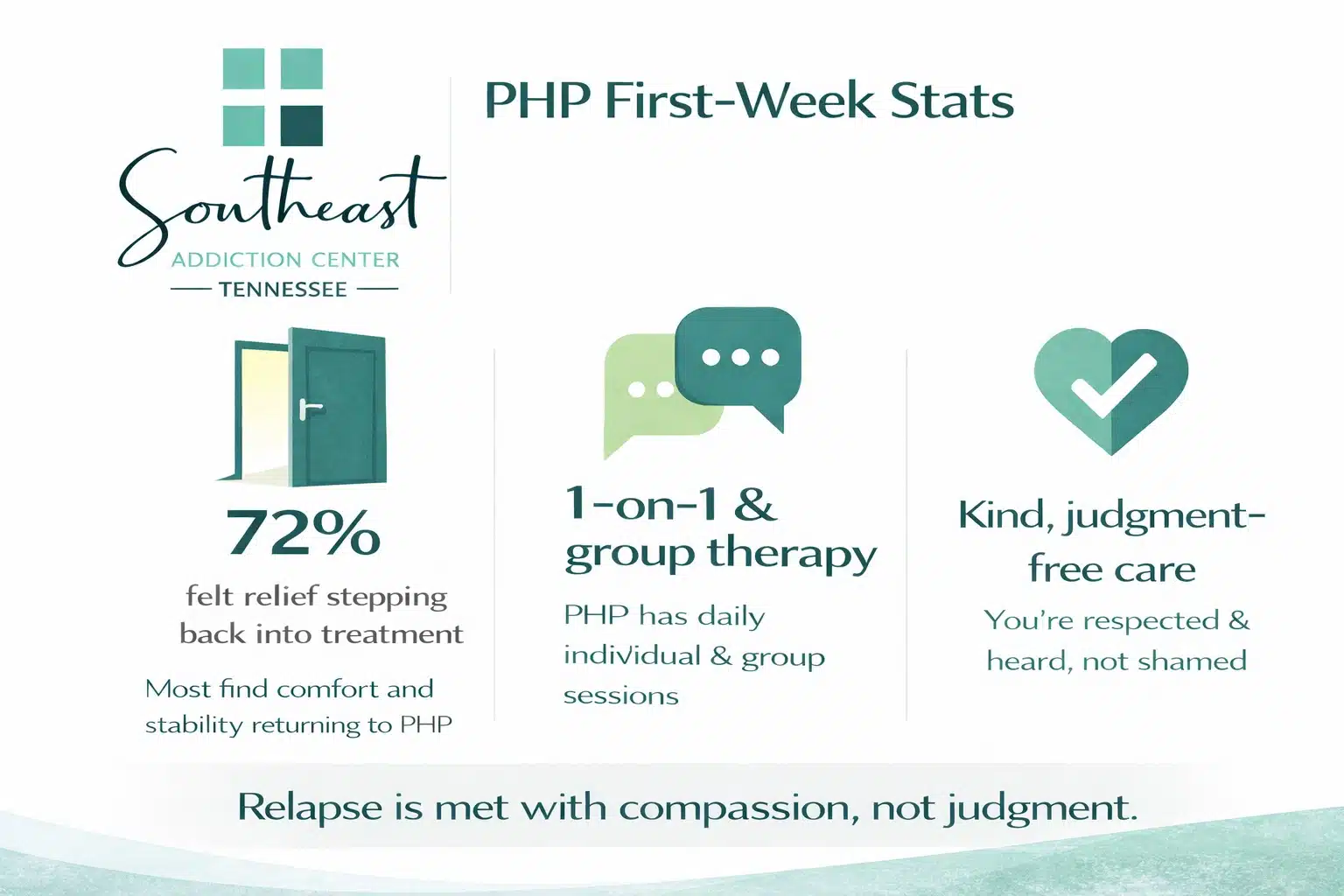
But when I walked into that group room, something strange happened: nobody looked at me like I had failed. Some people nodded. Some smiled. A few said,
“I’m glad you’re here.”
No one asked for my sobriety date. No one needed a speech. I was there. That was enough.
And in that room, I realized something I wish I had known sooner:
relapse isn’t rare. Silence is.
Group Therapy Helped Me Name What I Couldn’t Before
This time, I listened differently. Not just to others, but to myself.
In one session, someone shared about the fear of “wasting” everyone’s trust. Another talked about how relapse made them doubt every gain they’d made. I felt both of those stories in my chest.
When I finally spoke, I didn’t sugarcoat it. I said,
“I knew better—and I still picked up.”
The therapist didn’t flinch. The group didn’t turn away. One person just said,
“Me too.”
There was something holy in that moment. Like the room itself had decided, “You’re still one of us.”
PHP Gave Me Room to Rebuild—Not Perform
What I loved about PHP was the
space. I didn’t have to jump back into life at full speed. I didn’t have to pretend to be fine.
Each day gave me rhythm:
- Morning grounding
- Group therapy that actually dug deep
- Individual sessions where I could unpack relapse without being psychoanalyzed
- Education that helped me understand why I slipped—not just that I did
It wasn’t about checking boxes. It was about reconnecting with the
part of me that still wanted recovery.
I Had to Forgive Myself Out Loud
One of the hardest things I did in PHP wasn’t sharing about the relapse—it was forgiving myself for it.
Not just quietly, in my head. Out loud. In session. In front of people who had seen me do well and fall apart.
I said,
“I’m not proud of what happened. But I’m proud that I came back.”
And they nodded. Some cried. I cried too.
That’s when I realized:
I didn’t ruin my progress. I returned to it.
If you’re stuck in shame after a relapse, you’re not alone—and you’re not done.
Call
(615) 326-6449 or visit
Partial Hospitalization Program to explore rejoining care in Nashville, TN. You’re still worthy. You’re still welcome. Come back. We’re ready when you are.