


I was the person you’d never suspect.
Never missed a meeting. Carpool king. Crushed deadlines. Texts returned, groceries stocked, smile on. No one knew I was unraveling inside.
But eventually, I got tired of performing stable. I found Southeast Addiction’s intensive outpatient program in Nashville, and for the first time, I did something entirely for me.
I Was “High-Functioning”—But Nowhere Near Okay
I didn’t wake up in jail. I didn’t lose custody. I didn’t even get called out at work.
That’s what made it so hard to admit I had a problem. Because technically, I was still “doing fine.”
I was paying the bills, cracking jokes, giving advice. But every night, I drank just enough to take the edge off—then more to keep it off. I told myself it wasn’t a problem because I never got drunk drunk. I never missed anything important. I was still showing up.
But here’s the thing: functioning is not the same as thriving. And slowly, the cracks started to show.
I stopped sleeping well. My fuse got shorter. I dreaded phone calls. I had to have something in my system to feel like I could relax—just to breathe. And the scariest part? I almost convinced myself that was normal.
What Finally Broke Through Wasn’t a Crisis—It Was the Quiet Exhaustion
People think there has to be some dramatic rock bottom. But for me, the breaking point was subtle.
It was a Tuesday. I had just finished a long day of pretending I was fine. I was pouring a drink—my usual—when I caught myself whispering, I’m so tired. Not tired from work or parenting. Tired of lying to myself.
That sentence changed everything.
I didn’t call Southeast Addiction that night. I waited a few more weeks. Kept pretending. Kept showing up for everyone else. But that whisper stayed in my head. I’m so tired. Eventually, I listened.
I Thought IOP Was for “Worse” Cases
When I finally searched for help, I skipped over inpatient programs. Too intense. I wasn’t “that bad,” right?
Then I found the intensive outpatient program at Southeast Addiction in Nashville. I read the description three times because it didn’t sound like punishment. It sounded like a lifeline.
What drew me in was that IOP didn’t mean losing my job or leaving my family. It didn’t require me to vanish for 30 days. It was structured, yes—but also flexible. Human. Realistic.
And the team didn’t ask, “How bad is it?”
They asked, “How are you doing, really?”
I Walked Into Group Feeling Like an Impostor
That first day, I almost didn’t go in. I sat in the car rehearsing lines about why I didn’t really belong.
But I’m glad I walked in—because within five minutes, I heard someone else say what I’d been thinking:
“I didn’t think I belonged here. I have a good job. A good life. But I’m falling apart inside.”
I exhaled. I hadn’t realized how tight I’d been holding it all together. That group became the first place I could say out loud what I was too afraid to say anywhere else:
I need help. I’m not okay. And I don’t want to keep living like this.
Intensive Outpatient Gave Me Structure Without Chaos
IOP gave me three things I didn’t know I needed:
- Routine. My days had shape. I wasn’t floating.
- Accountability. I couldn’t disappear without someone noticing.
- Reflection. I learned to pause instead of pour.
And somehow, in between the therapy sessions and group shares, I started feeling like myself again—not the polished version I showed the world, but the version I’d buried under “shoulds” and substances.
I got to be honest. Angry. Sad. Hopeful. And no one flinched.
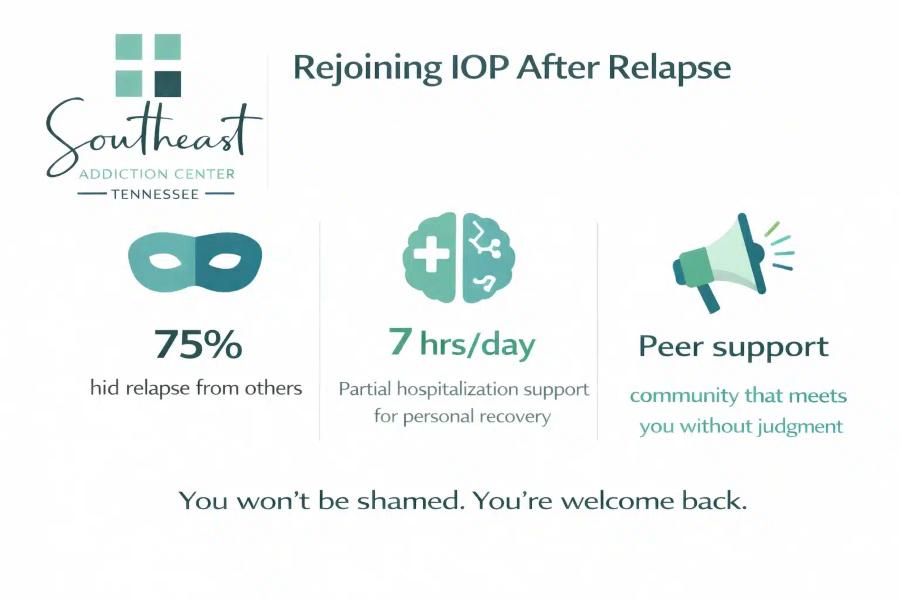
This Wasn’t Just About Drinking—It Was About Coming Back to Myself
Yes, the alcohol use decreased. Yes, the cravings faded. But what really changed?
I started feeling joy without needing to escape.
I got my mornings back—clear, not foggy.
I listened when people talked, instead of nodding while planning my next drink.
I re-learned how to be present.
One day, I realized I hadn’t thought about drinking at all. Not because I was white-knuckling it, but because I was living again.
I stopped checking out. I stopped disappearing into the next glass. I started building something real.
If You’re the One Holding It All Together—This Is for You
You might not be the one people worry about. You might be the one people lean on.
But if you’re tired of pretending, I want you to know this: you don’t have to wait for everything to fall apart to ask for help.
You can be responsible, dependable, and still in need of care.
You can love your life and want more from it.
You can still show up for others and finally start showing up for yourself.
And if you do? You might be surprised how everything else starts feeling lighter.
If you’re functioning—but quietly fading—this is your sign.
Call (615) 326-6449 to learn how Intensive Outpatient Program in Nashville can support your next chapter. You don’t have to fall apart to start getting better.